
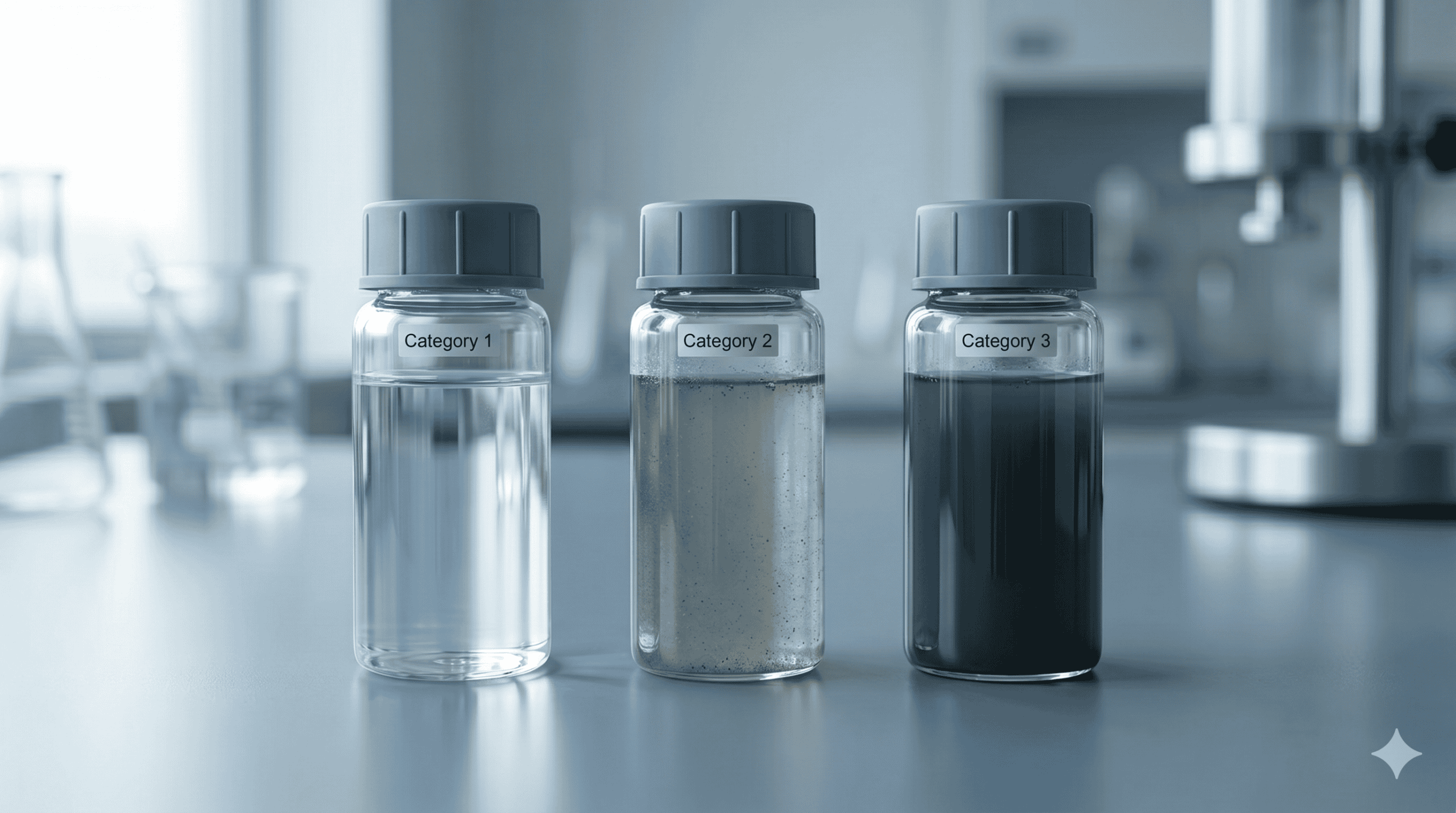
When a restoration professional assesses your water damage, one of the first determinations they make is the water category. This isn’t a marketing label — it is an industry classification framework that directly determines the cleanup approach required, what materials can be dried versus what must be removed, and ultimately what your restoration will cost.
Understanding these water damage categories helps you understand why certain cleanup decisions are made — and why “just dry it out” is not always an option.
Key Takeaways
- Water damage is classified into three categories by contamination level: Category 1 (clean water from a sanitary source), Category 2 (gray water with moderate contaminants), and Category 3 (black water containing pathogens and biological hazards).
- The category determines the cleanup approach — clean water can often be dried in place, while black water requires removing all porous materials it has soaked into, with no dry-in-place option.
- Water categories escalate over time: clean water can become gray water within 24–48 hours, and gray water can degrade to black water within 24–72 hours if untreated.
- A separate “class” system rates how deeply water has been absorbed (Class 1 through 4), and category and class together decide what can be saved versus removed.
- The category tells the restoration crew how to clean up; your insurance policy language determines whether the cause is covered.
Category 1: Clean Water
Source: Water from a sanitary source — a supply line under a sink, a water heater, a toilet tank (not the bowl), an ice maker line, or a clean-water appliance failure.
Contamination Level: Low. Category 1 water contains no significant biological or chemical contaminants at the point of origin.
Cleanup Protocol: Extract and dry. In a Category 1 event treated promptly, most structural materials can be dried in place — no drywall removal, no flooring tear-out. The goal is to bring moisture content in all affected materials back to normal dry levels using extraction equipment, air movers, and dehumidifiers.
Typical Cost Range: $500 – $4,000 for extraction and drying, depending on square footage and materials.
Critical Warning: Category 1 water does not stay Category 1 indefinitely. Within 24 to 48 hours of contact with building materials, microbial growth can begin — and the water classification escalates to Category 2. A clean-water event treated within a few hours is a very different job than the same event discovered 24 hours later.
Category 2: Gray Water
Source: Water that contains contaminants that could cause illness or discomfort if ingested or contacted at sufficient levels. Sources include: washing machine overflow, dishwasher discharge, aquarium water, toilet bowl overflow (urine only, no solids), sump pump failure, or hydrostatic seepage through a foundation.
Contamination Level: Moderate. Gray water contains biological agents, chemical residues, or physical contaminants sufficient to require protective protocols during cleanup.
Cleanup Protocol: Extraction, sanitization, and drying. Category 2 events require antimicrobial treatment in addition to drying. Porous materials that absorbed Category 2 water — particularly carpet padding — are typically removed and disposed of rather than dried in place, because drying them in place does not eliminate the biological contamination. Drywall may be dried in place or removed depending on contamination level and exposure time.
Typical Cost Range: $2,000 – $8,000+, depending on scope and materials affected.
Critical Warning: Gray water degrades to Category 3 within 24 to 72 hours if untreated, as microbial growth accelerates in saturated materials. A Category 2 event left unaddressed over a weekend becomes a Category 3 job by Monday.
Category 3: Black Water
Source: Grossly contaminated water containing pathogens, toxins, and biological hazards. Sources include: sewage backup through floor drains or toilets, floodwater from rivers or storm runoff, and water that has been left untreated long enough to reach severe contamination levels.
Contamination Level: High. Category 3 water contains bacterial contamination, potential viral agents, chemical residues, and other hazardous biological material. Direct contact without protective equipment is not safe.
Cleanup Protocol: Full containment, extraction, sanitization, and removal of all porous materials in the affected zone. There is no “dry in place” option for Category 3. All materials that absorbed black water — drywall, insulation, carpet, carpet padding, porous wood — are removed and disposed of. The remaining structural surfaces receive multiple applications of EPA-registered antimicrobial products. HEPA air scrubbers run throughout the project to address airborne contamination. Personal protective equipment is required for all workers throughout the job.
Typical Cost Range: $4,000 – $25,000+, depending on scope. Category 3 events are significantly more expensive than Category 1 or 2 because of the labor intensity, material disposal costs, and equipment requirements.
Health Note: Black water is a genuine health hazard. Do not wade through or handle sewage-contaminated water without protective gear. Do not use the affected space until professional sanitization is complete and the area has been cleared.
(For a full guide to cost documentation, see: How much does water damage restoration actually cost)
The Class System: How Much Was Absorbed?
Water categories describe contamination. Water classes describe absorption — specifically, how deeply water has penetrated into building materials. They are separate but both matter for determining the restoration approach.
Class 1: Minimal absorption — water affected only part of a room and impacted materials have a low evaporation rate. Fastest and least expensive to dry.
Class 2: Significant absorption — water affected an entire room, with moisture wicking at least 24 inches up walls. Carpets and cushion may be saturated.
Class 3: Severe absorption — water came from above (ceiling failure, upstairs leak), saturating walls, insulation, and ceiling materials. The most common scenario for full wall cavity drying or drywall removal.
Class 4: Specialty drying required — water has penetrated deeply into materials with very low permeance: hardwood floors, concrete, plaster, or crawlspace soils. Requires specialized low-humidity drying equipment and longer drying cycles.
A Category 1, Class 1 event is the least complex and least expensive scenario. A Category 3, Class 3 event is the most complex. Most real-world water damage events fall somewhere in between.
Why Water Damage Categories and Classes Determine What Can Be Saved
The question homeowners most often ask is: “Do you really have to tear out my drywall?”
The answer depends on category and class together. If moisture readings inside a wall cavity exceed drying thresholds and the water was Category 2 or 3, the responsible answer is yes — because leaving contaminated, moisture-saturated drywall in place creates the conditions for long-term structural degradation and mold growth that will be far more expensive to address later.
A trained restoration professional makes these decisions based on moisture meter readings, thermal imaging data, and the classification of the water — not on guesswork. Your insurer’s adjuster reviews the same documentation to verify that the scope of work was justified.
Frequently Asked Questions
My toilet overflowed — is that Category 3?
Not automatically. A toilet bowl overflow with only liquid (no solids) is typically classified as Category 2 gray water. A sewer line backup coming up through a floor drain, or an overflow involving solid waste, is Category 3. The distinction matters for cleanup protocol and cost.
Can Category 3 damage be restored, or does the entire structure need to be demolished?
In most cases, Category 3 damage can be remediated — structural framing that has dried to appropriate moisture content and been properly sanitized can remain. What cannot remain is any porous material that absorbed the contaminated water: drywall, insulation, carpet padding. The bones of the structure typically survive; the finishes typically do not.
How do I know which category my water damage is?
The source is the primary indicator. Your restoration professional will also assess the water directly and review the site conditions. When in doubt, professionals err toward the higher category — treating Category 2 as Category 3 is far less costly in the long term than treating Category 3 as Category 2.
Does water category affect my insurance coverage?
Category by itself does not determine coverage — the cause does. Sudden sewage backup (Category 3) is typically excluded from standard homeowners policies but covered if you have a sewer backup rider. Sudden pipe failure (Category 1) is typically covered. The category tells the restoration company how to clean up; your policy language tells the insurer whether to pay for it.