
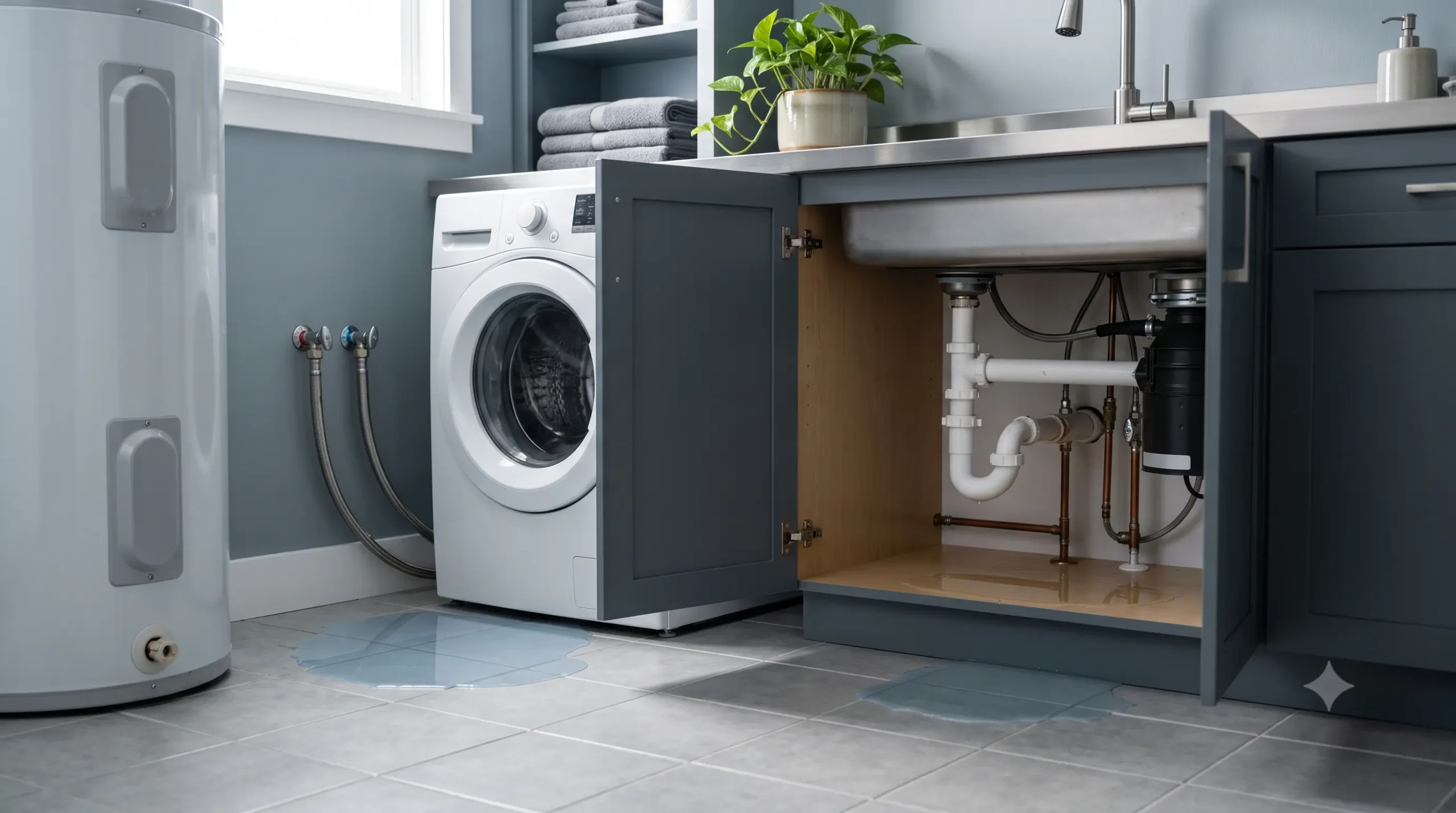
The Most Common Causes of Home Water Damage — and Where Each One Hits Hardest
Most water damage is predictable. It comes from a short list of failure points, and where you live tips the odds toward some causes over others.
Water damage rarely arrives out of nowhere. Behind almost every emergency call is one of a handful of familiar culprits: a pipe that froze, a hose that failed, a river that rose, a drain that backed up, or groundwater that found its way in. Knowing the usual causes — and which ones your climate and housing make more likely — is the difference between bracing for the right risk and being blindsided by it.
Below are the causes professionals see most, what triggers each, and the kinds of places where they cluster.
Key Takeaways
- Most home water damage traces to a short list: burst pipes, appliance and supply-line failures, flooding, sewer backups, and seepage.
- Appliance and supply-line failures are the most universal cause — they strike year-round, in every climate.
- Your climate and housing age tilt the odds: cold cities see burst pipes, river corridors see flooding, older cities see sewer backups.
- External flooding needs flood insurance and sewer backup needs a rider — neither is covered by a standard policy.
- Water wicks into walls within hours and mold can begin within 24 to 48, so a fast response is critical.
At a Glance: The Leading Causes
| Cause | Common trigger | Peak season | Where it clusters |
|---|---|---|---|
| Burst & frozen pipes | Hard freeze, aging pipe joints | Winter | Cold, older-housing cities |
| Appliance & supply-line failures | Failed hose, water heater rupture | Year-round | Everywhere; newer slab homes |
| River & flash flooding | Heavy rain, snowmelt, river crest | Spring / storm season | River & low-lying corridors |
| Sewer & drain backup | Heavy rain overwhelming old sewers | Storm season | Older combined-sewer cities |
| Roof, gutter & foundation seepage | Poor drainage, clogged gutters | Wet seasons | High-water-table areas |
| Sump-pump failure | Power loss, worn pump | Spring / heavy rain | Basement markets |
1. Burst and Frozen Pipes
When water inside a pipe freezes, it expands and can split the pipe — and the real damage often comes during the thaw, when pressure returns and water pours out. Older homes are most exposed, because decades-old cast iron and galvanized steel become brittle, and pipes routed through exterior walls or unheated spaces sit closest to the cold.
This is a winter story in cold, older-housing cities, and it hits hardest where aging pipes meet reliable cold — a place like Rockford, IL on the Rock River, much of its housing built before modern plumbing, or Flint, MI, where 1920s-to-1960s cast iron and galvanized steel still run through much of the housing stock. Cities like Eau Claire, Green Bay, Saginaw, and Erie see the same seasonal pattern. If a pipe lets go in your home, our step-by-step guide covers exactly what to do when a pipe bursts.
2. Appliance and Supply-Line Failures
The most universal cause has nothing to do with weather. Rubber and braided supply hoses fail, water heaters rupture, and washing-machine and dishwasher connections give way — often while no one is home. A failed half-inch supply line can release water continuously for hours, and on a slab floor it spreads sideways fast, wicking up into baseboards and drywall before anyone notices.
This one strikes everywhere, but it dominates in newer, slab-built markets where hard freezes are rare and the plumbing is modern — Sun Belt communities such as Brandon, FL and Clearwater, FL, along with Coral Springs and Hialeah. Inspecting hoses and replacing them before they fail is one of the cheapest forms of prevention there is.
3. River and Flash Flooding
When rain or snowmelt pushes a river over its banks, or a sudden downpour overwhelms drainage, water enters homes from the outside — a different problem than a burst pipe, and one a standard homeowners policy generally will not cover. It reaches finished walls, flooring, and anything stored low, and it often carries contaminants with it.
River and low-lying corridors carry this risk season after season — Joliet, IL, where the Des Plaines meets Hickory Creek; Aurora, IL on the Fox River; and downstate Evansville, IN, still shaped by the catastrophic 1937 Ohio River flood. Elkhart and Lafayette, Indiana face the same pattern along their own river basins. Because floodwater is treated as the most contaminated category, it is rarely a safe do-it-yourself cleanup — our explainer on water damage categories covers why.
4. Sewer and Drain Backup
In heavy rain, older municipal systems that carry stormwater and sewage in the same pipes can overflow — and that water backs up through the lowest drains in the house. It is the most hazardous kind of water damage, unsafe to handle without protective gear, and it is excluded from most standard insurance policies unless you carry a backup rider.
This is a defining problem in older combined-sewer cities. Peoria, IL sees its combined sewers overflow dozens of times a year, and Dearborn, MI has had heavy storms push sewer water into thousands of basements at once; Warren and Sterling Heights share the same aging-sewer risk. The Insurance Information Institute notes that sewer backups are excluded from typical homeowners and flood policies alike, so the rider is the only reliable coverage.
5. Roof, Gutter, and Foundation Seepage
Not every water problem is dramatic. Clogged gutters, poor grading, and cracked foundations let water collect against the house and seep in slowly. The EPA’s guidance is direct on the fix: make sure the ground slopes away from the foundation and keep gutters clean and flowing so water does not pool where it can get inside.
Homes near lakes and rivers with high groundwater feel this most — the shoreline neighborhoods of Holland, MI and the creek-fed low areas around South Lyon, MI are good examples, where a wet season keeps water tables high and pushes moisture into lower levels.
6. Sump-Pump Failure
In basement markets, the sump pump is the last line of defense against groundwater — and it fails at the worst possible moment, when a storm knocks out power or an old pump gives out under heavy inflow. Without a working pump (and ideally a battery backup), a basement can take on water within hours.
This clusters wherever finished basements meet high spring groundwater, common across the older basement neighborhoods of the upper Midwest. Preventing this specific failure is covered in our guide on how to prevent basement flooding.
Why Speed Beats Everything
Whatever the cause, the clock is the same. Water travels through building materials by wicking sideways and upward, so a contained spill becomes a structural problem within hours, and mold can begin within 24 to 48 hours of materials staying wet — a threshold the EPA ties directly to drying wet materials within that same window. The details are in our 48-hour mold guide, and the cost consequences in the hidden cost of delay.
Quick Prevention Checklist
- Know where your main water shutoff is — before you need it.
- Replace aging washing-machine and appliance hoses on a schedule.
- Keep gutters clear and grade soil to slope away from the foundation.
- Test the sump pump and add a battery backup in basement homes.
- Insulate pipes in unheated spaces before winter.
- Add a sewer-backup rider if you’re on older combined sewers.
Frequently Asked Questions
What is the single most common cause of home water damage?
Does my location really change which causes I should worry about?
Which causes are covered by insurance and which aren’t?
How quickly does water damage become serious?
Sources: US EPA — A Brief Guide to Mold, Moisture and Your Home · Insurance Information Institute · National Flood Insurance Program (FEMA).