
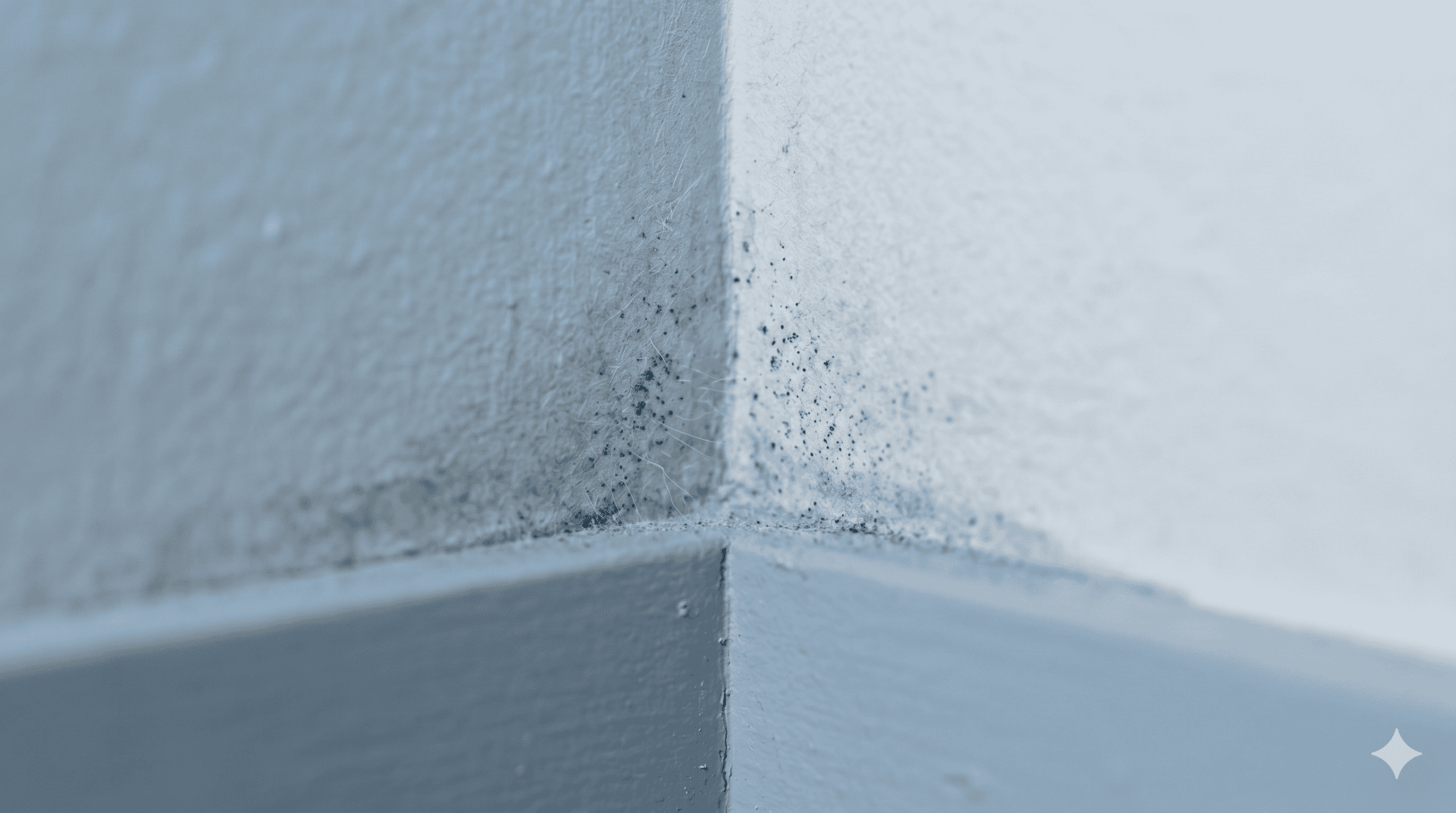
The 48-hour window is the most important number in water damage recovery. It is not a marketing phrase or an industry approximation — it is the threshold at which the conditions inside saturated building materials shift from “recoverable through extraction and drying” to “at risk of active mold growth.”
Understanding what happens in that window, and why the timeline is not the same in every home or every city, changes how urgently you respond to any water event.
Key Takeaways
- Mold spores are already present in nearly every home; water damage simply creates the moisture conditions that let them activate.
- Mold needs moisture, organic material, suitable temperature, and time — remove the moisture before 48 hours and germination is usually prevented.
- The most dangerous growth happens out of sight: inside wall cavities, under flooring, in crawlspaces, and within HVAC systems.
- Local climate shifts the window — in high-humidity areas the functional window can be closer to 24 hours, and freeze-climate homes trap moisture that can feed spring mold.
- Drying alone won’t eliminate mold that has already taken hold; established colonies require physical removal of affected materials and surface treatment.
What Mold Actually Needs to Grow
Mold is not introduced into your home by water damage. It is already there. Dormant mold spores are present in virtually every indoor environment — on surfaces, in the air, and inside building materials — in concentrations that are normal and non-threatening under dry conditions.
What water damage changes is the environment. Mold spores require four things to transition from dormant to active:
Moisture: Relative humidity above approximately 60 percent, or direct material saturation, creates the moisture conditions mold needs. Modern building envelopes trap and sustain that moisture.
Organic material: Mold digests organic building materials — drywall paper facing, wood framing, insulation, carpet backing, and subfloor panels. These materials are present throughout any residential structure.
Temperature: Mold grows most aggressively between 60°F and 80°F — the interior temperature range of virtually every occupied home.
Time: The combination of moisture, organic material, and suitable temperature, sustained over 24 to 48 hours, is what triggers germination. Remove any one of these factors — most practically, the moisture — before 48 hours and germination is prevented.
This is why 48 hours is the threshold. It is not arbitrary. It is the documented window within which professional extraction and drying equipment can remove the moisture before the fourth condition is met.
Mold After Water Damage — Hour by Hour
0 to 24 hours: Spores are present and moisture is sufficient, but germination has not begun. Professional extraction and drying initiated in this window almost always prevents mold development. The goal is mechanical moisture removal before the 24-hour mark if at all possible.
24 to 48 hours: Germination conditions are established inside saturated materials. Mold is not yet visible — it is developing at the microscopic level inside wall cavities, behind baseboards, and within the organic facing of drywall. A restoration crew working in this window can still prevent visible mold development but faces a more complex extraction challenge.
48 to 72 hours: Active mold growth is establishing in the highest-moisture areas. This will not yet be visible through finished surfaces but can be detected with air quality testing. The project scope has expanded from drying to drying plus mold risk assessment.
Beyond 72 hours: Visible mold growth appears on surfaces — typically as discoloration on drywall, a musty odor, or visible patches on porous materials. At this point, the scope has definitively shifted from water damage restoration to water damage restoration plus mold remediation. The two projects run in sequence and add days to the total timeline.
One to two weeks: Established mold colonies that can spread to HVAC systems, into adjacent rooms through air circulation, and into structural wood framing. Full removal at this stage means sealing off the area, controlled airflow, professional air filtration, and complete removal of all affected porous materials.
(Read more about the Hidden Costs of Delaying Water Damage Restoration)
Where Mold Hides After Water Damage
The most dangerous aspect of post-water-damage mold is not what grows on visible surfaces — it is what grows in concealed spaces that standard visual inspection cannot reach.
Inside wall cavities: Water from a pipe failure or appliance leak enters wall cavities and saturates insulation and the back face of drywall. The surface of the drywall may appear dry within 24 hours while the cavity behind it remains saturated for days. This is why thermal imaging and penetrative moisture meters — not visual inspection alone — determine whether a wall cavity is actually dry.
Under flooring: Water migrates under hardwood, laminate, vinyl plank, and tile flooring through seams and perimeter gaps. The subfloor beneath is often the last material to dry and the first to support mold growth.
In crawlspaces: Groundwater, condensation, and water from pipe failures in crawlspaces creates persistent high-humidity conditions that support mold growth on structural framing and subfloor materials. Crawlspace mold is frequently discovered months or years after an original water event — by which point it has become a significant remediation project.
In HVAC systems: If water infiltrates ductwork or air handling equipment, or if high-humidity air from a water event is pulled through the HVAC system during normal operation, mold can establish inside ducts and spread to unaffected areas of the home through air circulation.
How Local Climate Affects the Mold Timeline
The 48-hour threshold shortens in high-humidity environments. A water event in a coastal city like Wilmington, NC — where outdoor humidity regularly exceeds 70 percent and indoor humidity tracks accordingly — creates faster mold conditions than the same event in a drier inland climate. In high-humidity areas, the practical window for prevention can be closer to 24 hours.
In freeze-climate cities like Flint, MI or Reading, PA, freeze-thaw cycling creates a particular mold risk pathway: moisture driven into wall cavities during a winter water event is trapped by a building envelope sealed tight against the cold. Even after the original damage appears resolved, residual moisture inside those cavities — invisible without a moisture meter — sustains the conditions for spring mold development when temperatures rise.
Understanding your local climate’s specific contribution to mold risk is part of why it helps to be connected with restoration professionals who know the regional housing stock and seasonal conditions. Rapid Water Rescue matches you with professionals serving your area who understand how water behaves in local homes.
III covers freezing-pipe prevention and the burst mechanism
What Professional Mold Remediation Involves
When mold is confirmed — either visually or through air quality testing — remediation follows a defined process:
Sealing off the area: The affected space is sealed with plastic sheeting and put under controlled airflow so spores don’t spread to clean parts of the home during the work.
Air filtration: Professional air scrubbers run continuously throughout the work to capture airborne spores.
Removing affected materials: All porous materials with active mold growth are removed and bagged for disposal — typically drywall, insulation, carpet padding, and any subfloor with growth in it. Non-porous surfaces that can be saved are cleaned and treated with EPA-registered products.
Treating structural surfaces: Remaining framing, concrete, and metal receive a treatment to clear any surface contamination.
Final air testing: Air testing confirms spore counts in the area have returned to normal background levels, and a written clearance report documents completion.
Only after a confirmed clearance does rebuilding — new drywall, insulation, flooring — begin. Rebuilding over incomplete work traps active mold inside the new construction.
Frequently Asked Questions
Can I remove mold myself?
For very small surface mold patches — under 10 square feet — the EPA permits DIY treatment with appropriate safety equipment. For mold resulting from a water damage event, where the mold has likely penetrated beyond visible surfaces into wall cavities and building materials, professional remediation is strongly recommended. The surface you can see is rarely the full extent of the growth.
Is mold covered by homeowners insurance?
Mold remediation is covered by most homeowners insurance when it results from a covered water damage event — typically when the original event (pipe failure, appliance leak) was sudden and accidental and the homeowner took prompt mitigation steps. Mold resulting from long-term neglect or from a water event that was not promptly addressed is typically excluded. Documentation of the original event and of immediate mitigation steps is critical to a mold-related claim.
How do I know if there is mold I cannot see?
A musty odor without visible mold is the most common indicator of concealed growth. Professional air quality testing using spore trap sampling can confirm whether elevated mold counts are present in a space. Thermal imaging during a moisture inspection also identifies persistent moisture pockets that have not dried — the same areas most likely to support hidden mold growth.
Does mold go away on its own if the area dries out?
No. Active mold colonies that have germinated continue to exist even after moisture conditions return to normal. Drying removes the moisture that supports further growth but does not eliminate established colonies. Professional remediation — physical removal of affected materials and treatment of remaining surfaces with EPA-registered products.